
Neck Pain
Most neck pain in desk workers is a load problem, not a posture problem. The distinction matters.
907 sessions delivered. 145+ five-star reviews. ISRM Professional Diploma BTEC Level 5.
What is Neck Pain?
Neck pain in the clinical setting falls into two main categories: acute (whiplash, sudden onset) and chronic (insidious, work-related, postural). The majority of clients presenting with neck pain have a chronic pattern, developing over months or years of sustained cervical loading.
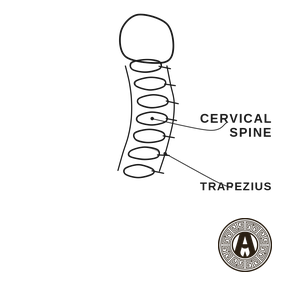
Tight upper traps and levator scapulae are the symptom. The cause is usually thoracic stiffness and poor scapular control forcing the cervical spine to compensate.
Why it happens
Desk work creates a predictable pattern: thoracic extension reduces, the head migrates forward, and the cervical extensors work constantly to hold the weight of the skull.
This is not about sitting up straight, it is about thoracic mobility and the load the cervical spine is managing per hour. Telling someone to improve their posture without addressing thoracic extension and scapular stability does not change the load. It just makes them consciously tense somewhere else.
"The upper traps are not the problem. They are compensating for thoracic stiffness and scapular instability that started months earlier."
How we treat Neck Pain
Assessment
Cervical range of motion, thoracic extension mobility, scapular control and resting position, upper limb neurodynamic screen (rule out cervical radiculopathy).
Tension Release
Soft tissue to upper trapezius, levator scapulae, suboccipitals, and sternocleidomastoid. Cupping to the posterior cervical and upper thoracic for chronic presentations. MFR to thoracolumbar fascia.
Strength Rebuild
Thoracic extension mobility work (foam roller extensions, cat-cow with thoracic bias), deep neck flexor activation, scapular retraction and depression loading.
Relevant Clinical Articles
DESK & PROFESSIONAL
Neck pain from screen work: the tissue mechanics
Neck pain from desk work is not a posture problem, it is a sustained cervical load problem. The tissue mechanics and what resolves it.
Read articleDESK & PROFESSIONAL
Upper crossed syndrome: the desk worker postural pattern
Upper crossed syndrome, tight pecs and upper traps, weak deep neck flexors and lower traps, drives neck pain, shoulder impingement, and headaches. The clinical approach.
Read articleRecommended for this condition
Not sure where to start?
A discovery call is a clinical conversation. Bring your history, your scan results, and your questions. No sales pitch.
Achilles Clinic
260 Pentonville Road
London, N1 9JY, United Kingdom
ISRM Level 5 Diploma in Soft Tissue Therapy