

Wrist pain treatment for the desk, the gym and everything in between.
Sore typing, pressing up or carrying the shopping? We find what is driving it, then build the wrist back up over six to eight weeks.
Need a scan or a doctor? You leave with written findings and where to go next.
What our clients say.
Google reviews from our clinics in Kings Cross and Hampstead.

“After struggling with Achilles tendon pain that had prevented me from running properly for some time. The rehabilitation was structured around gradually increasing my capacity rather than rushing the process. I was given clear guidance on loading, recovery and exercise progression, which made the whole process much easier to understand. Excellent clinical approach and very professional throughout, single handedly by one practitioner only. Highly recommend this clinic for anyone in Hampstead”
Khánh Lê Duy
Google review, Hampstead, October 2026
“Absolutely excellent therapist. I arrived with horribly tight and tense shoulders and neck and after a thorough consultation I got a thoughtful and bespoke treatment addressing the issues I raised and more I didn’t know were there. Alexander was very professional and polite and clearly knows what he is doing. I will be back!”
Marie-Claire Strawbridge
Google review, Kings Cross, April 2026
“I injured my ankle playing sport a few months ago and was still having stability and flexibility issues. Alexander did a very thorough assessment, getting to the root of the problem and building plan for going forwards - highly recommend!”
Hector McDonald
Google review, Kings Cross, August 2026
Does this sound like your wrist?
An ache in the wrist after a day at the keyboard and mouse
Sore taking weight on the hand: push ups, planks, front squats
Pain on the thumb side or the little finger side when you twist or grip
Stiff first thing, then it eases as you use it
Two or more? Book the assessment and we will find what is driving it. Book your assessment
Why a splint and rest have not fixed it.
Most wrist pain in active people is a load problem. The tendons and tissue around the wrist are asked to do more than they are ready for, through hours at a keyboard, a new gym routine, climbing or carrying. A splint and rest calm it, then it returns when you go back to normal. What changes it is finding what is loading the wrist, often the forearm and the way you grip, and building it back up, with someone checking it is working. That is what the programme is for.
The Achilles Method: one practitioner, three phases.
1
Assessment
We find what is driving the pain, checking the wrist, the forearm, the elbow and the neck.
2
Tension Release
Hands-on treatment to settle the forearm and the tissue around the wrist.
3
Strength Rebuild
A strength plan written for you, so the wrist can take your work and your training again.
Your plan is explained in the room and given to you in writing.
Prices: two ways to start.
START WITH THE ASSESSMENT
£129
Blueprint Assessment · 75 minutes
- ✓Find out what is driving it
- ✓Written findings and a plan
- ✓Go ahead with the programme and the £129 comes off
The Wrist Pain Programme
£765
8 sessions · 6 to 8 weeks
- ✓Starts with the Blueprint Assessment
- ✓Saves £99 against the same sessions one by one
- ✓The same practitioner at every session
If the assessment shows the programme is not right for you, everything except the assessment is refunded.
Changed your mind? Cancel within 14 days of booking and pay only for the sessions you have used.
Payment options, session validity and receipts+
- Book the full programme online and your first session is the Blueprint Assessment.
- Already had the Blueprint Assessment? Your seven remaining sessions are £636, in full or in two payments of £318.
- Started session by session? Switch to the programme within 14 days of the Blueprint Assessment and every session you have paid for counts towards it.
- Sessions are valid for 4 months from your first session.
- Written notes and home exercises between visits.
- A full receipt and paid invoice for every session, so you can claim it back if your policy covers treatment.
Find us in London.
Both clinics sit a short walk from the station. Open the map to check your route, or tap through for directions.

The same person, every session.
From your assessment to your last session, you see the same practitioner: Alexander Khang, an ISRM Level 5 Soft Tissue Therapist, at Kings Cross or Hampstead. He is not a registered physiotherapist. If your case needs a doctor or a registered clinician, he will tell you and refer you.
935
appointments
729
clients
5.0
from 265+ reviews
Kings Cross 260 Pentonville Road, 3 minutes' walk from Kings Cross St Pancras
Hampstead 40 Rosslyn Hill, 6 minutes' walk from Hampstead station
Questions before you book.
About the programme
Can I book the whole programme now?+
Yes. Book it online and your first session is the Blueprint Assessment. If the assessment shows the programme is not right for you, we refund everything except the assessment. You can also cancel within 14 days of booking and pay only for the sessions you have used. Prefer to meet first? Book the Blueprint Assessment on its own, and if you go ahead the £129 comes off the programme.
Do I have to stop training?+
Usually not. We agree what your wrist can handle at your assessment and adjust your pressing, planks, climbing or lifting around it, so you keep training while it settles.
How long does it take?+
The programme usually runs over six to eight weeks. Your assessment sets the plan for your wrist, and you leave with the plan to carry on.
What if it is not working?+
If it is not moving, the plan changes, or we refer you on.
Is Alexander a physiotherapist?+
No. Alexander is an ISRM Level 5 Soft Tissue Therapist, not a registered physiotherapist. Physiotherapy on this site describes a type of service, not a registration. If your case needs a registered clinician or a doctor, we tell you and refer you.
Can I claim on health insurance?+
We do not work with private medical insurers. We provide a full receipt and a paid invoice for every session, so if your policy or health cash plan reimburses treatment, you can claim it back yourself.
About wrist pain
What is causing my wrist pain?+
In active people it is most often the tendons around the wrist, overloaded by typing, gripping or taking weight on the hand. Pain on the thumb side when you grip or lift is often a tendon problem called De Quervain's. Pain on the little finger side when you twist or lean on the hand can come from the cartilage there. Your assessment tells us which you have before a single exercise is set.
Is it carpal tunnel syndrome?+
Carpal tunnel is a trapped nerve, and it usually feels different: tingling, numbness or pins and needles in the thumb, index and middle fingers, often worse at night. If that sounds like you, we will check it at your assessment and refer you to your GP if your case needs it.
Is it my keyboard or mouse?+
Often it is part of it. Hours in one position load the same tendons all day. Small changes to your setup and regular breaks help, but building strength in the forearm and wrist is what lets them cope.
Should I wear a wrist support?+
A support can make you more comfortable for now, especially at night. It does not make the wrist stronger. Building strength does, and that is what the programme is for.
Do I need a scan first?+
Usually not. Imaging helps after a fall, when a bone injury or a ligament tear is suspected, or when progress stalls, and we will tell you if yours is one of those.
Who do you see?+
Desk workers around Kings Cross, people who lift, climb, row or do yoga, parents lifting young children, and anyone whose wrist has not felt right for weeks. We see clients at both clinics, in Kings Cross and in Hampstead, and the assessment and the programme are the same at each.
When does wrist pain need a doctor?+
Go to A&E or urgent care if you fell onto your hand and it hurts at the base of the thumb, if the wrist is deformed or will not move, or if it swelled quickly after an injury.
See your GP first if the wrist is hot, red and swollen, if you feel unwell or feverish, if your fingers are numb or weak, or if several joints in your hands are stiff and swollen in the mornings. We screen for all of these at your assessment and refer you on if your case needs it.
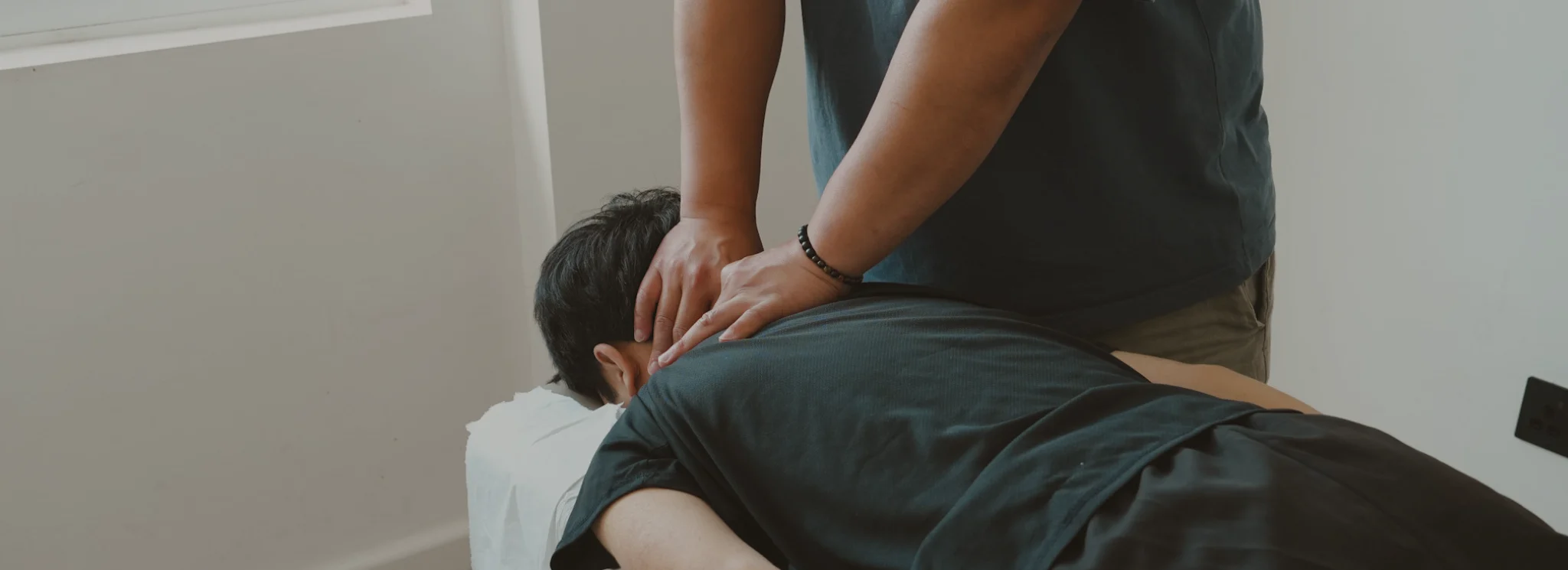
Start with the assessment.
75 minutes. Written findings. £129, taken off the programme if you go ahead.