
Desk Worker & Postural Pain
Desk-related pain is not a posture problem. It is a sustained load problem, and the solution is not to sit up straight.
Written by Alexander Khang, ISRM Level 5 Soft Tissue Therapist. 935 sessions delivered. 265+ five-star reviews.
What is Desk Worker & Postural Pain?
Desk worker pain is a cluster of presentations, including upper trap tension, cervical stiffness, lower back ache, and forearm tightness, that develop from sustained static loading. The problem is not any single posture but the duration of that posture without movement variation.
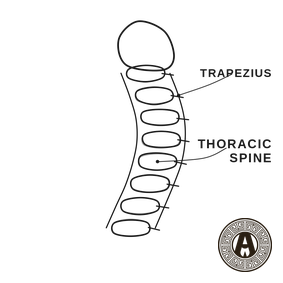
Soft tissue stiffness, trigger point development, and thoracic kyphosis all follow predictable patterns in people who sit for 6+ hours per day without structured movement.
Why it happens
The human body is designed for variety of load, not elimination of load. Sitting creates sustained compression in the lumbar discs, sustained shortening of the hip flexors, sustained cervical extensor loading, and gradually reduces thoracic extension mobility.
This is not solved by an ergonomic chair, it is solved by loading the tissue differently and frequently. Soft tissue therapy restores range and improves tissue quality. It is not a lasting fix unless loading habits change.
"The problem is not the chair. It is 8 hours in any chair without moving."
How we treat Desk Worker & Postural Pain
Assessment
We find which pattern is driving your pain: neck, upper back, lower back, or a mix.
Tension Release
Hands-on soft tissue work aimed at what the assessment found.
Strength Rebuild
Strength and mobility work that fits around a working day, and simple changes to how you move between tasks.
Relevant Clinical Articles
DESK & PROFESSIONAL
Back pain at a desk: why your chair is not the problem
Ergonomic chairs reduce discomfort but do not fix the load problem. A clinical explanation of what does.
Read articleDESK & PROFESSIONAL
Neck pain from screen work: the tissue mechanics
Neck pain from desk work is not a posture problem, it is a sustained cervical load problem. The tissue mechanics and what resolves it.
Read articleDESK & PROFESSIONAL
Upper crossed syndrome: the desk worker postural pattern
Upper crossed syndrome, tight pecs and upper traps, weak deep neck flexors and lower traps, drives neck pain, shoulder impingement, and headaches. The clinical approach.
Read articleDESK & PROFESSIONAL
Hip flexor tightness: why stretching alone does not fix it
The hip flexor is not short, it is weak in a shortened position. A clinical explanation of why passive stretching fails and what produces lasting change.
Read articleTreating this properly
This guide explains the problem. The programme treats it: a full assessment, then a course of hands-on treatment with the same practitioner.
See the Lower Back Pain ProgrammeNot sure where to start?
Bring your history, your scan results, and your questions. The assessment is a clinical conversation, not a sales pitch.
Achilles Clinic
260 Pentonville Road
London, N1 9JY, United Kingdom
ISRM Level 5 Diploma in Soft Tissue Therapy