
Lower Back Pain
Persistent lower back pain is almost never just a muscle problem. The tissue is reacting to how the whole spine loads.
Written by Alexander Khang, ISRM Level 5 Soft Tissue Therapist. 935 sessions delivered. 265+ five-star reviews.
What is Lower Back Pain?
Lower back pain is the most common musculoskeletal complaint in the UK. It ranges from acute mechanical pain (sudden onset, usually resolves within 6 to 8 weeks) to chronic non-specific pain (persisting beyond 12 weeks without a clear structural cause).
The majority of lower back pain seen in a soft tissue clinic is non-specific, meaning imaging shows no significant pathology. That does not mean the pain is not real. It means the problem is functional: how the lumbar spine, pelvis, and hips are distributing load.
Why it happens
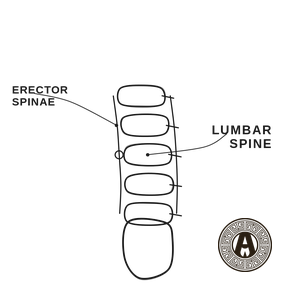
Prolonged sitting changes how the lumbar spine loads. The hip flexors shorten, the glutes disengage, and the lumbar paraspinals and quadratus lumborum compensate. This creates a chronic pattern of overuse in a small number of muscles.
Manual work, repetitive lifting, and high-volume sport create similar patterns from the opposite direction. In both cases, the spine is solving a mobility and stability problem elsewhere, and eventually the solution becomes the problem.
"Most chronic lower back pain is a movement and load problem, not a structural one. Imaging rarely changes the treatment approach."
How we treat Lower Back Pain
Assessment
We look at how the back, pelvis and hips are sharing load, and check for any sign that needs a doctor first.
Tension Release
Hands-on soft tissue work aimed at what the assessment found, which is often the hips as well as the back.
Strength Rebuild
Building strength and confidence in movement, and a gradual return to the things you have been avoiding.
Relevant Clinical Articles
DESK & PROFESSIONAL
Back pain at a desk: why your chair is not the problem
Ergonomic chairs reduce discomfort but do not fix the load problem. A clinical explanation of what does.
Read articleBACK & SPINE
Chronic lower back pain: why imaging often does not help
Most chronic lower back pain shows minimal pathology on MRI, because the problem is functional, not structural.
Read articleBACK & SPINE
Cupping therapy for lower back pain: a clinical guide
Cupping decompresses the posterior chain tissue driving lower back pain. When it works, what it does, and what to expect.
Read articleBACK & SPINE
Does sports massage help lower back pain?
Yes, clinical sports massage reduces lower back pain by addressing the soft tissue restrictions driving it. Most lower back pain is a load distribution problem, not a structural one.
Read articleTreating this properly
This guide explains the problem. The programme treats it: a full assessment, then a course of hands-on treatment with the same practitioner.
See the Lower Back Pain ProgrammeNot sure where to start?
Bring your history, your scan results, and your questions. The assessment is a clinical conversation, not a sales pitch.
Achilles Clinic
260 Pentonville Road
London, N1 9JY, United Kingdom
ISRM Level 5 Diploma in Soft Tissue Therapy