
Myofascial Pain & Trigger Points
Trigger points are not the problem. They are the symptom of a tissue that has been overloaded and never fully recovered.
Written by Alexander Khang, ISRM Level 5 Soft Tissue Therapist. 935 sessions delivered. 265+ five-star reviews.
What is Myofascial Pain & Trigger Points?
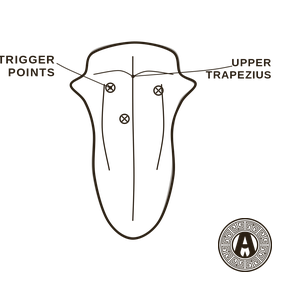
Myofascial pain refers to pain originating in the fascia and in trigger points: hyperirritable knots within muscle tissue that produce local and referred pain. A trigger point in the upper trapezius can produce a headache. A trigger point in the gluteus minimus can mimic sciatica.
The referral pattern is consistent and documented. Myofascial pain is underdiagnosed because it does not show on imaging. It is identified by examination and palpation.
Why it happens
Trigger points form when a muscle is held in a shortened position under sustained load. Desk work, repetitive sport, and chronic postural patterns all create the conditions for trigger point development.
Fascial restriction develops more slowly; months or years of restricted movement or poor hydration allow the fascial matrix to become adhesive and less mobile. Both problems compound each other.
"A trigger point in the upper trap that causes headaches is not a head problem. It is a load problem in the neck and shoulder that has been there for months."
How we treat Myofascial Pain & Trigger Points
Assessment
We map where the pain is felt and where it is coming from, which are often different places.
Tension Release
Hands-on soft tissue work aimed at the tissue that is driving the pain.
Strength Rebuild
Changing the load and positions that keep the problem coming back, and strengthening what has switched off.
Relevant Clinical Articles
SOFT TISSUE
Trigger point therapy: what it is and who needs it
Trigger points produce local and referred pain that does not show on imaging. How they form, where they refer, and how they resolve.
Read articleTREATMENTS
What is myofascial release and how is it different from deep tissue?
Compression vs sustained stretch. A clinical explanation of what myofascial release does and when it is the right choice.
Read articleTREATMENTS
What myofascial cupping is and how it differs from traditional cupping
Myofascial cupping uses movement and decompression to address fascial restrictions. Traditional cupping is static. A clinical comparison.
Read articleTreating this properly
This guide explains the pattern. Each condition we treat runs as a programme: a full assessment, then a course of hands-on treatment with the same practitioner.
See the condition programmesNot sure where to start?
Bring your history, your scan results, and your questions. The assessment is a clinical conversation, not a sales pitch.
Achilles Clinic
260 Pentonville Road
London, N1 9JY, United Kingdom
ISRM Level 5 Diploma in Soft Tissue Therapy