
Plantar Fasciitis
The heel pain is real. The cause is usually not in the heel.
Written by Alexander Khang, ISRM Level 5 Soft Tissue Therapist. 935 sessions delivered. 265+ five-star reviews.
What is Plantar Fasciitis?
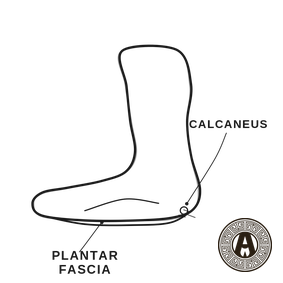
Plantar fasciitis is a load-related degeneration of the plantar fascia, the thick connective tissue band running from the heel bone to the base of the toes. The term "fasciitis" implies inflammation, but like Achilles tendinopathy, chronic cases show fascial thickening and tissue disorganisation rather than active inflammation.
Pain is typically worst with the first steps in the morning and after periods of sitting. It is common in runners, people who stand for long hours, and those who have recently increased activity after a sedentary period.
Why it happens
The plantar fascia absorbs load with every step. When that load exceeds the fascia's capacity to distribute it, the tissue degenerates at its insertion point on the calcaneus. Tight calf complex, reduced ankle dorsiflexion, and weak intrinsic foot muscles all increase fascial stress.
Poor footwear that removes the foot's natural load-absorption function is a contributing factor. Stretching the fascia passively provides temporary relief but does not address the load problem.
"Morning heel pain is not stiffness, it is the tissue telling you its load capacity has been exceeded."
How we treat Plantar Fasciitis
Assessment
We look at how the foot, ankle and calf are sharing load, and rule out other causes of heel pain.
Tension Release
Hands-on soft tissue work through the foot and lower leg, aimed at what the assessment found.
Strength Rebuild
Building strength so the foot can take load again, with a gradual return to walking and running.
Relevant Clinical Articles
ACHILLES REHAB
Why plantar fasciitis does not get better with stretching
Stretching a degenerated fascia increases load on the damaged tissue. What actually resolves plantar fasciitis.
Read articleACHILLES REHAB
Why your Achilles pain keeps coming back
Rest treats the symptom, not the cause. A clinical explanation of why Achilles pain returns, and what actually changes the load problem.
Read articleTreating this properly
This guide explains the problem. The programme treats it: a full assessment, then a course of hands-on treatment with the same practitioner.
See the Plantar Fasciitis ProgrammeNot sure where to start?
Bring your history, your scan results, and your questions. The assessment is a clinical conversation, not a sales pitch.
Achilles Clinic
260 Pentonville Road
London, N1 9JY, United Kingdom
ISRM Level 5 Diploma in Soft Tissue Therapy